About 15 minutes
Canterbury: A Sketch Book — Reading Notes
Architecture
3,356 recorded words. 0 minutes difference from this book's estimate.
View Gutenberg source #54198
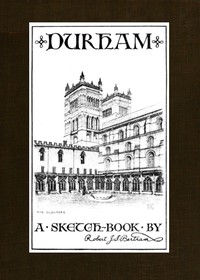
Durham: A Sketch-Book — Story, Setting & Ideas can be approached with a clearer sense of reading commitment from its source measurements: 3,298 words, 15 min estimated reading time, and 1 detected text section.
The text analysis averages about 19.8 words per sentence, while the detected sections provide another way to judge how the source is divided.
Project Gutenberg metadata also associates the work with “Durham (England) -- Pictorial works,” connecting these edition facts with the source record’s subject description.
Explore this collection
These alternatives are selected using recorded categories and estimated reading time.
About 15 minutes
Architecture
3,356 recorded words. 0 minutes difference from this book's estimate.
View Gutenberg source #54198About 15 minutes
Architecture
3,306 recorded words. 0 minutes difference from this book's estimate.
View Gutenberg source #54220About 15 minutes
Architecture
3,263 recorded words. 0 minutes difference from this book's estimate.
View Gutenberg source #54313Search stored excerpts and compare books → Choose by your preferences →
Choices use stored catalog measurements. Estimates vary with reading speed. A shared category is a catalog label, not a claim that two books have the same argument or literary quality.
Search reads excerpt text stored with this catalog and links to its associated Gutenberg record. The connection is stored in the site database; this tool does not recheck that every excerpt is word-for-word identical to that external record. Excerpt search does not cover every chapter and does not verify historical publication dates.
Catalog snapshot checked: 2026-09-26. Coverage: 90 public books, 90 available source excerpts.
Calculated from edition completeness, EPUB availability, text structure and catalogue metadata. Not a user rating.
Total of 100 points, scaled to a 2.5-5.0 range. Editions with an empty description or a missing EPUB file are not scored.
1 The Cloisters. 2 The North Aide. 3 The Galilee. 4 Chapel of Nine Altars. 5 The Nave. 6 Central Tower from Palace Green. 7 The Abbey Gate. 8 West End: from the River. 9 Bishop Cosin's Doorway. 10 The Great Hall. 11 The Courtyard and Chapel. 12 The Norman Chapel. 13 The Black Staircase. 14 View from the Battery. 15 Crossgate and St. Margaret's Church. 16 Framwellgate Bridge. 17 From the Castle battlements. 18 Sadler Street. 19 The Market Place. 20 St. Giles' Church. 21 Elvet Bridge. 22 St. Oswald's Church. 23 North Bailey & St. Mary's Church. 24 Prebends Bridge.
End of Project Gutenberg's Durham; A Sketch-Book, by Robert J. S. Bertram
Robert J.S. Bertram's Durham: A Sketch-Book presents twenty-four illustrations of the city's architecture, from the Cathedral and Castle to bridges and streets. The work is structured as a sequence of sketches, each with a brief caption. The captions themselves reveal a subtle shift in voice: early entries like 'The Cathedral' and 'The Cloisters' are straightforward labels, while later ones such as 'View from the Battery' and 'From the Castle battlements' adopt a more observational, almost diaristic tone. This progression suggests a journey through Durham, moving from iconic landmarks to quieter, more personal viewpoints.
The captions in Bertram's sketch-book are not uniform. Early sketches are named with simple nouns: 'The Cathedral,' 'The Cloisters,' 'The North Aide.' These function as identifiers, directing attention to the subject itself. As the sequence progresses, captions become more descriptive and locational: 'Central Tower from Palace Green,' 'West End: from the River,' 'View from the Battery.' The addition of prepositions—'from,' 'at'—introduces a sense of perspective and movement. The final entries, such as 'Sadler Street' and 'The Market Place,' return to simpler forms, but now they evoke everyday urban life rather than monumental architecture. This variation in caption style subtly guides the reader's experience, shifting from cataloging to storytelling.
The list of sketches is printed twice in the front matter, once in a single column and again in a two-column layout. This repetition creates a rhythmic effect, emphasizing the sequence as a curated tour. The second listing groups some sketches under headings like 'The North Aide' and 'The Galilee,' which are also individual sketch titles. This overlap blurs the line between section and subject, suggesting that the book itself is a kind of architectural walk. The repeated names—'The Cathedral,' 'The Castle,' 'The City'—anchor the reader, while the intervening sketches (bridges, doorways, churches) provide variety. The structure mimics the experience of moving through Durham: returning to familiar landmarks while discovering new details.
Although the excerpts do not include the illustrations themselves, the sketch list implies a deliberate pacing. Each sketch is given its own line, and the list is broken into groups by blank lines or section breaks. For instance, after 'Prebends Bridge' the list ends, and the publication information follows. This spacing creates pauses, allowing the reader to mentally 'view' each sketch before moving on. The absence of descriptive text beyond captions means the images must carry the narrative weight. The pace is unhurried, inviting contemplation. The final sketch, 'Prebends Bridge,' closes the sequence on a note of transition—a bridge suggesting both connection and departure.
Bertram's sketch-book rewards a slow, attentive reading. Pay attention to the order of sketches and the subtle shifts in caption language; they form a quiet narrative of exploration. The repetition of certain landmarks across the list hints at multiple viewpoints, encouraging the reader to imagine the artist moving through Durham, selecting and framing each scene.
Flipping through Bertram’s Durham plates, I remembered sitting with my grandfather’s old York sketchbook, the same soft pencil lines tracing cloisters and river bends. Both books feel less like guides, more like someone’s private way of saying goodbye to stone. That quiet ache of place, never fully captured, lingers longer than any photograph. York: A Sketch-Book — Background and Themes holds that same unhurried warmth for me.
Create a short personal record of your experience with this book.