About 15 minutes
Canterbury: A Sketch Book — Reading Notes
Architecture
3,356 recorded words. 0 minutes difference from this book's estimate.
View Gutenberg source #54198
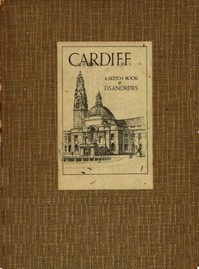
This digital edition of Cardiff: A Sketch-Book — Background and Themes is described by source-level measurements including 3,295 words, 15 min estimated reading time, and 1 detected text section.
The text analysis averages about 20.6 words per sentence, while the detected sections provide another way to judge how the source is divided.
Project Gutenberg metadata also associates the work with “Cardiff (Wales) -- Pictorial works,” connecting these edition facts with the source record’s subject description.
Explore this collection
These alternatives are selected using recorded categories and estimated reading time.
About 15 minutes
Architecture
3,356 recorded words. 0 minutes difference from this book's estimate.
View Gutenberg source #54198About 15 minutes
Architecture
3,306 recorded words. 0 minutes difference from this book's estimate.
View Gutenberg source #54220About 15 minutes
Architecture
3,263 recorded words. 0 minutes difference from this book's estimate.
View Gutenberg source #54313Search stored excerpts and compare books → Choose by your preferences →
Choices use stored catalog measurements. Estimates vary with reading speed. A shared category is a catalog label, not a claim that two books have the same argument or literary quality.
Search reads excerpt text stored with this catalog and links to its associated Gutenberg record. The connection is stored in the site database; this tool does not recheck that every excerpt is word-for-word identical to that external record. Excerpt search does not cover every chapter and does not verify historical publication dates.
Catalog snapshot checked: 2026-09-26. Coverage: 90 public books, 90 available source excerpts.
Calculated from edition completeness, EPUB availability, text structure and catalogue metadata. Not a user rating.
Total of 100 points, scaled to a 2.5-5.0 range. Editions with an empty description or a missing EPUB file are not scored.
1 Title-Page. City Hall. 2 The Bute Statue, and Western Mail Building. 3 St Mary Street, from Old Town Hall. 4 The Castle. 5 The Castle. 6 Canton Bridge. 7 Queen Street. 8 St John's Church, from Church Street. 9 Trinity Street, and St John's Church. 10 The Library, and Batchelor Statue. 11 Custom House, from Pier Head. 12 Coal-loading Crane. 13 Bute West Dock. 14 Bute East Dock. 15 The Canal. 16 The Law Courts, Tredegar Statue & City Hall. 17 The City Hall. 18 Statue and City Hall. 19 Welch National Museum, & German 8" Howitzer. 20 Roath Park. 21 Llandaff Fields. 22 Llandaff. 23 Llandaff Cathedral. 24 Llandaff Cathedral, West End.
End of Project Gutenberg's Cardiff; A Sketch-Book, by Douglas S. Andrews
D. S. Andrews's Cardiff: A Sketch-Book presents twenty-four monochrome sketches of the Welsh capital, each accompanied by a terse caption. The work belongs to a genre of topographical sketch-books popular in the early twentieth century, but Andrews's authorial choices—particularly in what he includes and omits—shape a distinct vision of Cardiff. The sketches move from civic monuments like the City Hall and Castle to industrial scenes such as the Bute West Dock and a coal-loading crane, yet the captions offer no commentary, leaving the images to speak for themselves. This restraint in diction, combined with the selection of views, suggests a deliberate focus on the city's architectural and commercial landmarks rather than its residential or social life.
Andrews's choice of subjects reveals a clear editorial hand. Of the twenty-four sketches, nearly half depict civic or religious buildings: the City Hall appears three times, the Castle twice, and Llandaff Cathedral twice. Commercial and industrial sites—the Custom House, Bute West Dock, the coal-loading crane—are included but never dominate. Notably absent are residential streets, markets, or any depiction of everyday life. The captions are purely locational: “St Mary Street, from Old Town Hall” or “The Canal.” No people appear in any title, and the sketches themselves, based on the list, likely show empty streets or distant figures. This framing presents Cardiff as a city of monuments and infrastructure, not of inhabitants. Andrews's authorial choice to exclude human activity aligns with the sketch-book tradition of architectural portraiture, but it also imposes a stillness that may feel curated rather than candid.
The captions in Cardiff: A Sketch-Book are remarkably economical. Each consists of a place name and sometimes a directional note, such as “from Old Town Hall” or “from Church Street.” There are no adjectives, no verbs, no descriptions of atmosphere or weather. This minimalist diction forces the viewer to derive all meaning from the image itself. Compare this to the verbose captions common in contemporary travel books; Andrews's restraint is a deliberate stylistic choice. The only exception is the inclusion of “German 8" Howitzer” in the caption for the Welch National Museum sketch, a specific detail that dates the work to the post-World War I period. This lone deviation from the pattern highlights the otherwise consistent refusal to editorialize. The captions do not tell the reader what to see; they merely indicate the subject.
The ordering of sketches follows a loose geographical logic, beginning with the City Hall and moving outward to the docks, then to parks and Llandaff. But the sequence is not strictly linear: after the industrial Bute East Dock, the next sketch is “The Canal,” followed by a return to civic buildings. This suggests Andrews organized the book thematically rather than as a walking tour. The inclusion of two sketches of the Castle and three of the City Hall indicates a prioritization of these landmarks. The final four sketches move to Llandaff, ending with the cathedral's west end. This structural choice gives the book a sense of progression from the urban core to the suburban and ecclesiastical periphery. The absence of any map or explanatory text means the sequence itself becomes the primary narrative device, guiding the reader's eye across Cardiff's built environment.
Andrews's work participates in a specific early twentieth-century genre: the artist's sketch-book of a city, published by A. & C. Black. These books typically featured a series of plates with brief captions, intended for the armchair traveler or as a souvenir. Andrews adheres to this format strictly, with no introduction or notes beyond the title page. The sketches are reproduced in monochrome, likely from pen-and-ink or pencil drawings. The choice of medium affects the tone: line drawings emphasize structure and contrast, lending a crisp, architectural quality. The absence of color or shading detail means the viewer focuses on form. Andrews's authorial hand is visible in the selection of viewpoints—many sketches use a low angle or a distant perspective that monumentalizes the buildings. The genre constraints do not diminish Andrews's individual choices; rather, they frame them as deliberate responses to a commercial and aesthetic tradition.
Readers approaching Cardiff: A Sketch-Book should attend to what the captions do not say. The work is a record of selective seeing, one that privileges the monumental and the commercial over the domestic and the human. Andrews's authorial choices—in diction, sequence, and subject—construct a particular vision of Cardiff circa 1920. To read the book is to see not the city itself, but a curated gallery of its public face. The sketches invite comparison with contemporary photographs or maps, revealing the gaps between representation and reality.
There’s a quiet wistfulness in how Andrews framed Cardiff’s streets, picking out the sunlit corners while leaving the shadows to the imagination. It reminds me of an old gardening manual I once kept nearby, one that prided itself on shaping only the loveliest views. Garden-Craft Old and New — A Reader’s Guide feels similarly tender about its chosen patches of green, as if editing the world were a kindly act.
Create a short personal record of your experience with this book.