About 786 minutes
Pompeii, Its Life and Art — Inside the Classic
Architecture
180,696 recorded words. 75 minutes difference from this book's estimate.
View Gutenberg source #42715
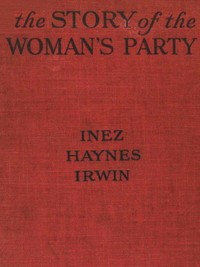
For The Story of the Woman's Party — Edition Insights, the stored edition analysis reports 163,522 words, 11 hr 51 min estimated reading time, and 47 detected text sections.
The text analysis averages about 17.9 words per sentence, while the detected sections provide another way to judge how the source is divided.
Project Gutenberg metadata also associates the work with “Women -- Suffrage -- United States,” connecting these edition facts with the source record’s subject description.
Explore this collection
These alternatives are selected using recorded categories and estimated reading time.
About 786 minutes
Architecture
180,696 recorded words. 75 minutes difference from this book's estimate.
View Gutenberg source #42715About 516 minutes
Architecture
118,543 recorded words. 195 minutes difference from this book's estimate.
View Gutenberg source #59595About 513 minutes
Architecture
117,906 recorded words. 198 minutes difference from this book's estimate.
View Gutenberg source #73341Search stored excerpts and compare books → Choose by your preferences →
Choices use stored catalog measurements. Estimates vary with reading speed. A shared category is a catalog label, not a claim that two books have the same argument or literary quality.
Search reads excerpt text stored with this catalog and links to its associated Gutenberg record. The connection is stored in the site database; this tool does not recheck that every excerpt is word-for-word identical to that external record. Excerpt search does not cover every chapter and does not verify historical publication dates.
Catalog snapshot checked: 2026-09-26. Coverage: 90 public books, 90 available source excerpts.
Calculated from edition completeness, EPUB availability, text structure and catalogue metadata. Not a user rating.
Total of 100 points, scaled to a 2.5-5.0 range. Editions with an empty description or a missing EPUB file are not scored.
Public-domain source text
The source text is kept in the dedicated reader, separate from this catalogue record and its commentary.
Inez Haynes Irwin opens The Story of the Woman's Party with a dedication that sets the tone: the book is offered “admiringly and reverently” to the Party’s members, especially those whose work could not be individually mentioned. The front matter includes a photograph of Alice Paul taken the day before she went to prison, and epigraphs from Susan B. Anthony—her last public words, insisting the fight must not cease. These elements frame the narrative as a tribute to collective sacrifice, not a detached history.
The table of contents reveals a four-part structure: 1913–1914, 1915–1916, 1917, and “Victory.” Part Three’s subheadings—such as “The Peaceful Picketing,” “The War on Pickets,” and “The Strange Ladies”—signal that Irwin will chronicle escalating confrontations with the state. The excerpts from later in the book describe a coordinated protest in November 1917, when forty-one women marched in five groups to the White House gates, bearing “golden-lettered banners” and “purple, white, and gold flags.”
The book’s front matter is more than ornament. Irwin’s dedication singles out “the inspired, devoted, untiring, and self-sacrificing members” and explicitly acknowledges those whose efforts “may never even in the future be properly appreciated.” This language anticipates a narrative that will foreground collective action over individual fame. The epigraph from Susan B. Anthony—her last public words, spoken in 1906—warns that “the fight must not cease; you must see that it does not stop.” By placing this call to perseverance before the first chapter, Irwin signals that the Woman’s Party saw itself as continuing Anthony’s unfinished work. The photograph of Alice Paul “taken the day before she went to prison” visually anchors the text in the reality of arrest and imprisonment. Readers encountering these elements first will understand that the book intends to honor endurance under legal persecution.
The table of contents maps a clear arc from organization to victory. Part One (1913–1914) covers the founding of the Party and early pressure on Congress and President Wilson. Part Two (1915–1916) introduces the Woman’s Party as a formal entity and describes appeals to women voters. Part Three (1917) is dominated by the “Perpetual Delegation” and its sub-sections: “Peaceful Picketing,” “Peaceful Reception,” “War on Pickets,” “The Court and the Pickets,” and “The Strange Ladies.” This progression from peaceful protest to state repression is mirrored in the language of the headings. Part Four, “Victory,” includes chapters on lobbying, the president’s capitulation, ratification, and “The Last Days.” The structure itself tells a story of mounting conflict—from lobbying to picketing to imprisonment—before resolution. Readers can use this outline to track the Party’s tactical evolution.
The excerpt from Part Three describes a carefully orchestrated protest on November 10, 1917. Forty-one women marched from headquarters in five groups, each led by a named organizer. The first group was led by Mrs. John Winters Brannan; the fifth by Mary A. Nolan, described as “little, frail, lame, seventy years old.” Irwin notes that the pickets carried “golden-lettered banners” and “purple, white, and gold flags,” and walked “slowly—always a banner’s length apart.” The police arrested each group in turn, and the crowd applauded. One voice called out: “Keep right on! You’ll make them give it to you!” The passage includes a full list of the forty-one women’s names, a deliberate act of documentation. Irwin’s prose is precise and visual, emphasizing the ritualized nature of the protest—the signals, the grouping, the arrest—and the public’s shift from indifference to support.
Irwin’s narrative voice is that of a sympathetic chronicler who lets facts speak. She does not editorialize about the justice of the cause; instead, she reports actions, names, and numbers. The list of forty-one pickets, complete with full names and group assignments, reads like a roll call. The description of the protest includes precise details: the cleaning-woman who carried messages between Alice Paul and headquarters; the signal given by Katherine Morey and Catherine Flanagan; the “prearranged signal” that sent the crowd running under Paul’s window. These details ground the story in lived experience. Irwin also notes the legal charge—“obstructing traffic”—and the plea of “Not Guilty.” The effect is to create a documentary record that feels both immediate and archival. Readers should pay attention to how Irwin balances individual stories (Mary A. Nolan’s age and frailty) with the collective action of the group.
Because the excerpts are drawn from the middle and later portions of the book, they show the Woman’s Party at its most militant—organizing mass pickets, accepting arrest, and using the courts as a stage. The opening sections, which cover the Party’s formation and early lobbying, are not represented here. Readers should expect the tone and tactics to shift over the course of the narrative. Irwin’s method is cumulative: she builds her account through lists, dates, and names, trusting that the accumulation of detail will convey the scale of the movement. Approaching the book as a documentary history rather than a memoir will help readers appreciate its structure and purpose.
I kept thinking about the silence of those polling-place vigils, the patient weight of women waiting in the cold. It reminded me, oddly, of the Biographical catalogue of the portraits at Weston, the seat of the Earl of Bradford — Reading Notes, where every face holds a private history unspoken above the caption. Different rooms, but the same quiet duty of remembering.
A brief reflection can help important ideas stay with you longer.