About 101 minutes
High society — A Reader’s Guide
Architecture
23,230 recorded words. 8 minutes difference from this book's estimate.
View Gutenberg source #56739
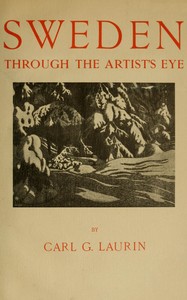
Before opening Sweden — A Closer Reading, the edition data offers a quick orientation: 21,240 words, 1 hr 33 min estimated reading time, and 7 detected text sections.
The text analysis averages about 30.7 words per sentence, while the detected sections provide another way to judge how the source is divided.
Project Gutenberg metadata also associates the work with “Painting, Swedish -- 19th century,” connecting these edition facts with the source record’s subject description.
Explore this collection
These alternatives are selected using recorded categories and estimated reading time.
About 101 minutes
Architecture
23,230 recorded words. 8 minutes difference from this book's estimate.
View Gutenberg source #56739About 82 minutes
Architecture
18,807 recorded words. 11 minutes difference from this book's estimate.
View Gutenberg source #39528About 109 minutes
Architecture
24,905 recorded words. 16 minutes difference from this book's estimate.
View Gutenberg source #55387Search stored excerpts and compare books → Choose by your preferences →
Choices use stored catalog measurements. Estimates vary with reading speed. A shared category is a catalog label, not a claim that two books have the same argument or literary quality.
Search reads excerpt text stored with this catalog and links to its associated Gutenberg record. The connection is stored in the site database; this tool does not recheck that every excerpt is word-for-word identical to that external record. Excerpt search does not cover every chapter and does not verify historical publication dates.
Catalog snapshot checked: 2026-09-26. Coverage: 90 public books, 90 available source excerpts.
Calculated from edition completeness, EPUB availability, text structure and catalogue metadata. Not a user rating.
Total of 100 points, scaled to a 2.5-5.0 range. Editions with an empty description or a missing EPUB file are not scored.
Public-domain source text
The source text is kept in the dedicated reader, separate from this catalogue record and its commentary.
Carl G. Laurin’s Sweden: Through the Artist’s Eye opens not with a dry catalogue of painters but with a poet’s invocation—‘Fall, Christmas snow, and blow, ye North and West’—and immediately establishes a dual voice. The author admits that Swedes ‘do not find it easy to dilate on her merits to any passing stranger,’ yet proceeds to do precisely that, weaving personal affection with a historian’s restraint. This tension between lyrical patriotism and critical observation shapes the entire work.
The text shifts register frequently: from the intimate ‘we know full well that there are other mothers, more beautiful’ to the blunt depiction of a ‘dead-drunk’ peasant in Zorn’s ‘A Fair at Mora.’ Such juxtapositions reveal Laurin’s effort to balance national pride with unflinching realism, a stance he calls ‘genuine, and ardent, yet at the same time, discreet.’
Laurin’s prose moves between two poles: the rhapsodic and the matter-of-fact. The opening pages borrow from verse—‘Sweden, our mother, be our strife, our rest’—and then pivot to a sociological observation about Swedish reserve: ‘We love our mother, but we do not find it easy to dilate on her merits to any passing stranger.’ This self-awareness recurs throughout. When describing Schultzberg’s ‘Walpurgis-night Bonfires,’ Laurin notes the bonfires ‘blazing on the hills, while the snow-drifts … tell that the reign of winter is not yet completely shattered.’ The sentence blends visual precision with a hint of narrative tension. Later, he recounts witch trials at Käringberget with a historian’s detachment, then shifts to a moral reflection: ‘those symbolic fires shine forth, themselves purified from wailing and corruption.’ The voice is never uniform; it adapts to subject, from painterly description to cultural commentary.
The pacing of the text mirrors the movement of a guided tour: slow, lingering passages on landscape and art alternate with brisk, anecdotal asides. A long, almost painterly description of Lake Siljan and the Gesunda Hill—‘Above the great expanse of Lake Siljan rises in the west the Gesunda Hill’—gives way to a compressed historical note on Gustaf Vasa’s 1521 speech. The rhythm quickens when Laurin recounts the ‘trials of witches’ or the inventor’s ‘mechanical improvements,’ then slows again for a painter’s detail: ‘the jingle of the bells resounds over the dazzling white landscape.’ This variation prevents monotony and keeps the reader alert to shifts in tone. The translator, Grenville Grove, and editor, Henry Buergel Goodwin, preserve these rhythmic changes, even rendering verse ‘metrically’ to maintain the original’s cadence.
Laurin’s nationalism is never unguarded. He explicitly rejects ‘false national pride with its cheap pathos and bombastic phrases’ and equally condemns ‘national self-effacement.’ This critical stance surfaces in small, telling details. Describing Zorn’s ‘A Fair at Mora,’ he notes the ‘dead-drunk’ peasant and the ‘flaxen-haired woman, waiting for him to recover,’ then adds dryly: ‘Whether the fellow will be a nicer customer then, is another matter.’ The irony undercuts any sentimental view of rural life. Similarly, the praise of Swedish inventors—John Ericsson, de Laval, L. M. Ericsson—is undercut by the context: a grandfather ‘deeply absorbed in his mechanical improvements’ is presented with affectionate but wry humor. Laurin’s patriotism is thus earned through honesty; he includes the seamy side without apology, making the admiration for landscape and art feel more genuine.
Readers will find that Laurin’s editorial voice—at once lyrical and skeptical—offers a model of how to write about national art without jingoism. The book rewards attention to its shifts in register: the same author who waxes poetic about midsummer bonfires can also describe a drunk peasant with clinical detachment. This duality makes the work more than a period piece; it is a study in how to balance affection with critical distance. Approach the text as a conversation between a proud Swede and a clear-eyed observer, and the nuances of its prose will emerge.
I think of Laurin’s Sweden often, that odd mixture of love and clear-eyed wandering. It has the same quiet tension as Selected etchings by Piranesi, series 2 — Text and Context, where admiration never quite blinds the observer. Old friends, both, who taught me that looking closely is its own kind of loyalty. I remember that fondly.
Use these questions to collect your thoughts before moving on.