About 19 minutes
The Prince of Wales and other famous Americans — Context and Discussion
Architecture
4,269 recorded words. 0 minutes difference from this book's estimate.
View Gutenberg source #70493
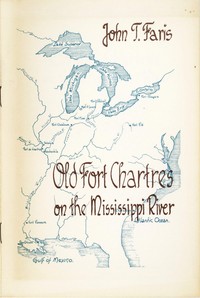
For Old Fort Chartres on the Mississippi River — Inside the Classic, the stored edition analysis reports 4,318 words, 19 min estimated reading time, and 1 detected text section.
The text analysis averages about 24.1 words per sentence, while the detected sections provide another way to judge how the source is divided.
Project Gutenberg metadata also associates the work with “Illinois -- Antiquities,” connecting these edition facts with the source record’s subject description.
Explore this collection
These alternatives are selected using recorded categories and estimated reading time.
About 19 minutes
Architecture
4,269 recorded words. 0 minutes difference from this book's estimate.
View Gutenberg source #70493About 17 minutes
Architecture
3,804 recorded words. 2 minutes difference from this book's estimate.
View Gutenberg source #23450About 21 minutes
Architecture
4,655 recorded words. 2 minutes difference from this book's estimate.
View Gutenberg source #71256Search stored excerpts and compare books → Choose by your preferences →
Choices use stored catalog measurements. Estimates vary with reading speed. A shared category is a catalog label, not a claim that two books have the same argument or literary quality.
Search reads excerpt text stored with this catalog and links to its associated Gutenberg record. The connection is stored in the site database; this tool does not recheck that every excerpt is word-for-word identical to that external record. Excerpt search does not cover every chapter and does not verify historical publication dates.
Catalog snapshot checked: 2026-09-26. Coverage: 90 public books, 90 available source excerpts.
Calculated from edition completeness, EPUB availability, text structure and catalogue metadata. Not a user rating.
Total of 100 points, scaled to a 2.5-5.0 range. Editions with an empty description or a missing EPUB file are not scored.
Public-domain source text
The source text is kept in the dedicated reader, separate from this catalogue record and its commentary.
The pamphlet opens with a striking image: "an astonishing bit of feudal France on the banks of the Mississippi River." This phrase immediately establishes the fort as an anomaly—a piece of Old World order transplanted into the American wilderness. Faris then anchors the narrative in the fertile American Bottom, a geographic detail that recurs as a stage for the French villages and their "sleepy, Old World life." The opening thus primes the reader to view Fort Chartres not merely as a military structure but as a cultural outpost, a lens through which to examine colonial ambitions and daily life.
The foreword reveals that this text originally appeared as a chapter in Faris's The Romance of Forgotten Towns (published by Harper & Brothers). The 1955 reprint by the Public Library of Fort Wayne and Allen County frames it as "an important part of our heritage." This provenance matters: the reader is holding a curated excerpt, not a standalone monograph. The pamphlet's brevity—4,318 words—means every paragraph carries weight. Faris wastes no time on preamble; he plunges into the fort's founding in 1720 by Philippe François de Renault, who brought "two hundred white men and five hundred Santo Domingo negroes," explicitly introducing slavery into the region. This detail, stated without elaboration, signals that the text will interweave grand schemes (John Law's Mississippi Bubble) with blunt social facts.
Faris connects the fort's construction to John Law's Company of the Indies, a financial scheme that promised dividends from "mountains of gold and silver, lead, copper, and quicksilver." The pamphlet reproduces a contemporary engraving showing "the arrival of the French at the Mississippi river, and savages with their squaws rushing to meet the new arrivals with evident respect and admiration." This image, described rather than shown, encapsulates the promotional hype that drove speculation. Faris does not dwell on the Bubble's collapse; instead, he uses it to explain why a fort was needed—to protect Company servants from the Spanish. The reader is left to infer the gap between propaganda and reality, a tension that underlies the entire account.
Though the excerpts are incomplete, they hint at Faris's method: he moves from historical context to physical description. The fort's walls, gates, and surviving structures become evidence of the French presence. The pamphlet likely describes the stonework, the layout, and the gradual decay after the British takeover. A first-time reader should pay attention to how Faris balances archival sources (like the engraving) with on-the-ground observation. The text is part of a "historical series" aimed at library patrons, so it assumes curiosity but not expertise. The closing sections probably address the fort's later neglect and its status as a historic site, inviting the reader to consider what remains visible today.
Faris's prose is direct and slightly formal, with a fondness for concrete details: "the southern extremity of the fertile American Bottom," "sleepy, Old World life." He avoids academic jargon, making the text accessible. The structure follows a chronological arc from founding to decline, but the pamphlet's origin as a chapter means it may skip some transitions. Readers should note the shift from the fort's military purpose to its social life—the French villages, the friendly relations with Indians, the introduction of enslaved labor. These elements are presented as facts, not arguments, leaving the reader to assemble the larger picture. The pamphlet rewards attention to names (Renault, Law) and dates (1720) that anchor the narrative in a specific moment of colonial history.
This pamphlet offers a compact entry point into a layered history. For a first reading, focus on how Faris uses the fort as a stage for intersecting stories: financial speculation, colonial rivalry, and everyday life on the frontier. The text's brevity means that each detail—the engraving, the mention of slavery, the geographic setting—carries interpretive weight. Consider what the pamphlet leaves out (the collapse of the Bubble, the fort's later fate) as much as what it includes. This is not a comprehensive history but a vivid snapshot, best read with an eye for the tensions between French ambition and American reality.
Holding that pamphlet, I remembered my grandfather's hands turning brittle pages about vanished forts. Stone walls, porcelain, both things we touch to feel time. Chats on Royal Copenhagen Porcelain — Text and Context once gave me that same ache, a quiet wonder at craft outlasting its makers. Strange, how objects keep their silence so loudly.
Capture what you thought, learned, and would like to remember.