About 42 minutes
A Lecture on Stained Glass — Inside the Classic
Architecture
9,543 recorded words. 2 minutes difference from this book's estimate.
View Gutenberg source #66850
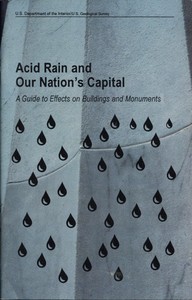
Acid Rain and Our Nation's Capital: A Guide to Effects on Buildings and Monuments — Story, Setting & Ideas can be approached with a clearer sense of reading commitment from its source measurements: 9,967 words, 44 min estimated reading time, and 2 detected text sections.
The text analysis averages about 20.8 words per sentence, while the detected sections provide another way to judge how the source is divided.
Project Gutenberg metadata also associates the work with “Acid rain -- Environmental aspects -- Washington (D.C.),” connecting these edition facts with the source record’s subject description.
Explore this collection
These alternatives are selected using recorded categories and estimated reading time.
About 42 minutes
Architecture
9,543 recorded words. 2 minutes difference from this book's estimate.
View Gutenberg source #66850About 46 minutes
Architecture
10,527 recorded words. 2 minutes difference from this book's estimate.
View Gutenberg source #68515About 40 minutes
Architecture
9,192 recorded words. 4 minutes difference from this book's estimate.
View Gutenberg source #36066Search stored excerpts and compare books → Choose by your preferences →
Choices use stored catalog measurements. Estimates vary with reading speed. A shared category is a catalog label, not a claim that two books have the same argument or literary quality.
Search reads excerpt text stored with this catalog and links to its associated Gutenberg record. The connection is stored in the site database; this tool does not recheck that every excerpt is word-for-word identical to that external record. Excerpt search does not cover every chapter and does not verify historical publication dates.
Catalog snapshot checked: 2026-09-26. Coverage: 90 public books, 90 available source excerpts.
Calculated from edition completeness, EPUB availability, text structure and catalogue metadata. Not a user rating.
Total of 100 points, scaled to a 2.5-5.0 range. Editions with an empty description or a missing EPUB file are not scored.
Public-domain source text
The source text is kept in the dedicated reader, separate from this catalogue record and its commentary.
Elaine McGee's guide opens by establishing a direct chemical context: Washington, D.C. rain averages a pH of 4.2, comparable to a carbonated drink and over ten times more acidic than clean rain. This precise figure immediately frames the booklet as a science-based field companion rather than a general history. The author then promises a walking tour that will show readers where to see acid precipitation's impact on marble and limestone buildings, setting up a structure that moves from laboratory-style explanation to on-site observation.
The opening pages devote careful space to defining acid precipitation and the pH scale, using a diagram that lists common substances from battery acid (pH 1) to lye (pH 13). McGee explains that unpolluted rain has a pH of 5.6 due to carbonic acid, while Washington's rain ranges from 4.2 to 4.4. The extra acidity comes from sulfur and nitrogen oxides emitted by vehicles and power plants. This groundwork is essential because the guide later asks readers to connect these chemical principles to visible damage: marble exposed to rain develops a rough 'sugary' texture as calcite grains loosen and dissolve. The text thus trains the eye to see chemistry in action.
The middle excerpts follow a sequential walking tour through downtown Washington. At the Organization of American States Building (marble, 1910), McGee points out blackened gypsum crusts on sheltered areas and dissolution on exposed ones. She notes that patio-side balusters are in better condition because washing has removed crusts, while garden-facing sides show blistering and spalling. At the DAR Constitution Hall (limestone, 1930s), the focus shifts to blackening from algae or fungi, aided by the stone's porosity and Washington's humid climate. The tour then moves to Memorial Continental Hall (marble, 1909), where carved details on column bases reveal that sheltered areas retain sharp edges while exposed ones have rounded. Pyrite grains stand in relief where calcite and micas have weathered away.
Throughout the tour, McGee emphasizes contrasts between sheltered and exposed surfaces as a teaching tool. At Memorial Continental Hall, the porch area allows direct comparison: replaced balustrade sections differ in color and roughness; the top of the balustrade is rougher than sheltered parts; window-sill supports show a dull gray alteration crust just beginning to form. The guide also notes that stone quality and maintenance history affect deterioration—for example, a sandstone gatehouse spalls because it was never painted. These observations train readers to look for multiple factors: chemical exposure, physical shelter, material composition, and human intervention.
The excerpts do not reveal the full walking route or the booklet's conclusion. They show a methodical approach: define terms, give a pH reference, then lead readers site by site with specific details about each building's stone type, construction date, and observable damage. The guide avoids broad claims about national significance, instead grounding each observation in measurable acidity and visible weathering. Readers should expect a focused, evidence-driven narrative that prioritizes what can be seen and measured over interpretation. The tour format implies that the best way to understand acid rain's effects is to walk and look carefully.
This guide rewards readers who take it literally: follow the route, pause at each site, and compare what you see to the descriptions. The chemical data provided early on becomes a lens for interpreting stone surfaces. Because the excerpts are incomplete, readers should not assume the tour covers all monuments or that later sections introduce broader policy discussions. The value lies in the precise, site-specific observations that connect atmospheric chemistry to architectural decay.
There’s something tender about watching stone surrender to weather, the way McGee’s walking tour makes acid rain feel less like chemistry and more like time itself. It reminded me of flipping through York: A Sketch-Book — Background and Themes years ago, where old buildings seemed to whisper their own slow vanishing. Both books keep company with impermanence, quietly. I still think about that.
Capture what you thought, learned, and would like to remember.