
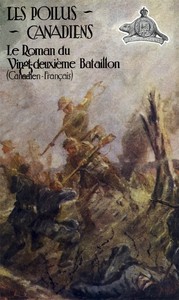
Les poilus canadiens: Le roman du vingt-deuxième bataillon canadien-français
J.A. Holland's book gives us a front-row seat to the story of the 22nd Battalion, a French-Canadian infantry unit formed in 1914. We follow them from their creation, through brutal training, and right into the heart of the Western Front. The narrative isn't about grand generals and sweeping strategies. It's about the men in the mud. We see them build trenches, face shelling, and launch attacks in places like Flanders and the Somme. The centerpiece is their crucial role in the famous Battle of Vimy Ridge in 1917. But the fighting is only part of the story.
Why You Should Read It
What makes this book stick with you isn't just the history—it's the people. Holland makes you feel the unique tension these soldiers lived with every day. They were fighting for Canada and the British Empire, but their heart language was French, often looked down upon by the English-speaking command. You get a real sense of their pride, their frustration, and their incredible bravery. They had to prove themselves twice: to the enemy, and to their own side. The book shows how this shared struggle forged an unbreakable bond among them. It's a powerful look at how war shapes not just nations, but the very idea of who we are.
Final Verdict
This is a perfect pick for anyone who loves character-driven historical stories. If you enjoyed books like All Quiet on the Western Front but want a distinctly Canadian perspective, you'll find it here. It's also a great read for anyone curious about Quebec's history and the roots of Canadian identity. You don't need to be a military expert; Holland explains the context clearly. Just be ready for an honest, often gritty, portrait of courage under the most extreme pressure. It's a tribute to a group of heroes whose story deserves to be remembered.
You are viewing a work that belongs to the global public domain. You can copy, modify, and distribute it freely.
Thomas Hernandez
1 year agoI found the data interpretation to be highly professional and unbiased.
Sarah Taylor
2 years agoAs a professional in this niche, the way it handles controversial points with balance is quite professional. A trustworthy resource that I'll keep in my digital library.
Emily Harris
2 months agoIf you're tired of surface-level information, the language used is precise without being overly academic or confusing. It cleared up a lot of the confusion I had previously.
Michael Anderson
1 month agoI've been looking for a reliable source on this topic, and the clarity of the writing makes even the most dense sections readable. A mandatory read for anyone in this industry.



Margaret Miller
6 months agoIf you're tired of surface-level information, the nuanced approach to the central theme was better than I expected. Top-tier content that deserves more recognition.