
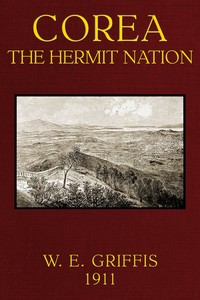
Corea: The Hermit Nation by William Elliot Griffis
Imagine you’re an American teacher in 19th-century Japan, and you get a letter asking you to help modernize a country most maps just labeled 'Hermit Kingdom.' That was William Elliot Griffis. Corea: The Hermit Nation is his first-hand account of arriving in Korea just as it was being dragged, kicking and screaming, into global politics.
The Story
This isn't a novel with a single plot, but the story is gripping. Griffis pieces together Korea’s long history from ancient myths to the Joseon Dynasty, explaining how a culture with printing presses and advanced astronomy became so fiercely isolated. The real drama starts when he describes the outside world’s growing pressure—American gunboats, Japanese diplomats, and European traders all knocking (or pounding) on the door. The book climaxes with the 1882 signing of the Korea–United States Treaty, a moment Griffis witnessed, which finally ended centuries of official seclusion.
Why You Should Read It
You read this for the perspective. It’s history written with the biases and wonder of its time. Griffis admires Korean art and scholarship but is also a product of 19th-century Western thinking. This dual view is the book's magic and its flaw. You get amazing details—like how Korean officials used silver rulers as status symbols—but you also have to read between the lines. It feels less like a lecture and more like listening to a smart, opinionated traveler who just came back from an unbelievable trip.
Final Verdict
Perfect for history buffs who want a primary source, or anyone curious about Korea’s past beyond pop culture. It’s not a balanced, modern history text. It’s a snapshot. You’re seeing the birth of modern Korea through the excited, sometimes prejudiced, eyes of one of the first Westerners to get a good look. If you approach it as a fascinating historical document and not the final word, you’ll be completely absorbed.
This work has been identified as being free of known copyright restrictions. Enjoy reading and sharing without restrictions.
Mary Harris
8 months agoGood quality content.
Karen Lee
1 year agoAfter finishing this book, the emotional weight of the story is balanced perfectly. I couldn't put it down.

Joshua Smith
1 year agoFrom the very first page, the character development leaves a lasting impact. Thanks for sharing this review.